
Last updated: November 2026 · Brigade Hospitality
Quick answer: Devanahalli Fort, in Devanahalli taluk, Bengaluru Rural district, began as a mud fort built in 1501 by Malla Baire Gowda and was rebuilt in stone under Hyder Ali. Tipu Sultan was born nearby. See the oval walls, 12 bastions and the Venugopalaswamy temple inside. Signature Club Resort is among the hotels in Devanahalli for a longer visit.
At a glance
- Where: Devanahalli taluk, Bengaluru Rural district, north of Bengaluru (Bangalore), on the same side of the city as Kempegowda International Airport.
- Built: As a mud fort in 1501 by Malla Baire Gowda; later rebuilt in stone under Hyder Ali.
- What to see: An oval fort wall with 12 semi-circular bastions, the Sri Kote Venugopalaswamy temple inside, and Tipu Sultan’s birthplace memorial nearby.
- Timings and fees: The official pages we checked list no visiting hours or entry fee. Check locally before you go.
- Where to stay nearby: Signature Club Resort, Brigade Orchards, Devanahalli, about 20 minutes from Kempegowda International Airport, with 45 rooms and 4 villas.
- Enquiries: +91 99723 05352 or info@brigadehospitality.com.
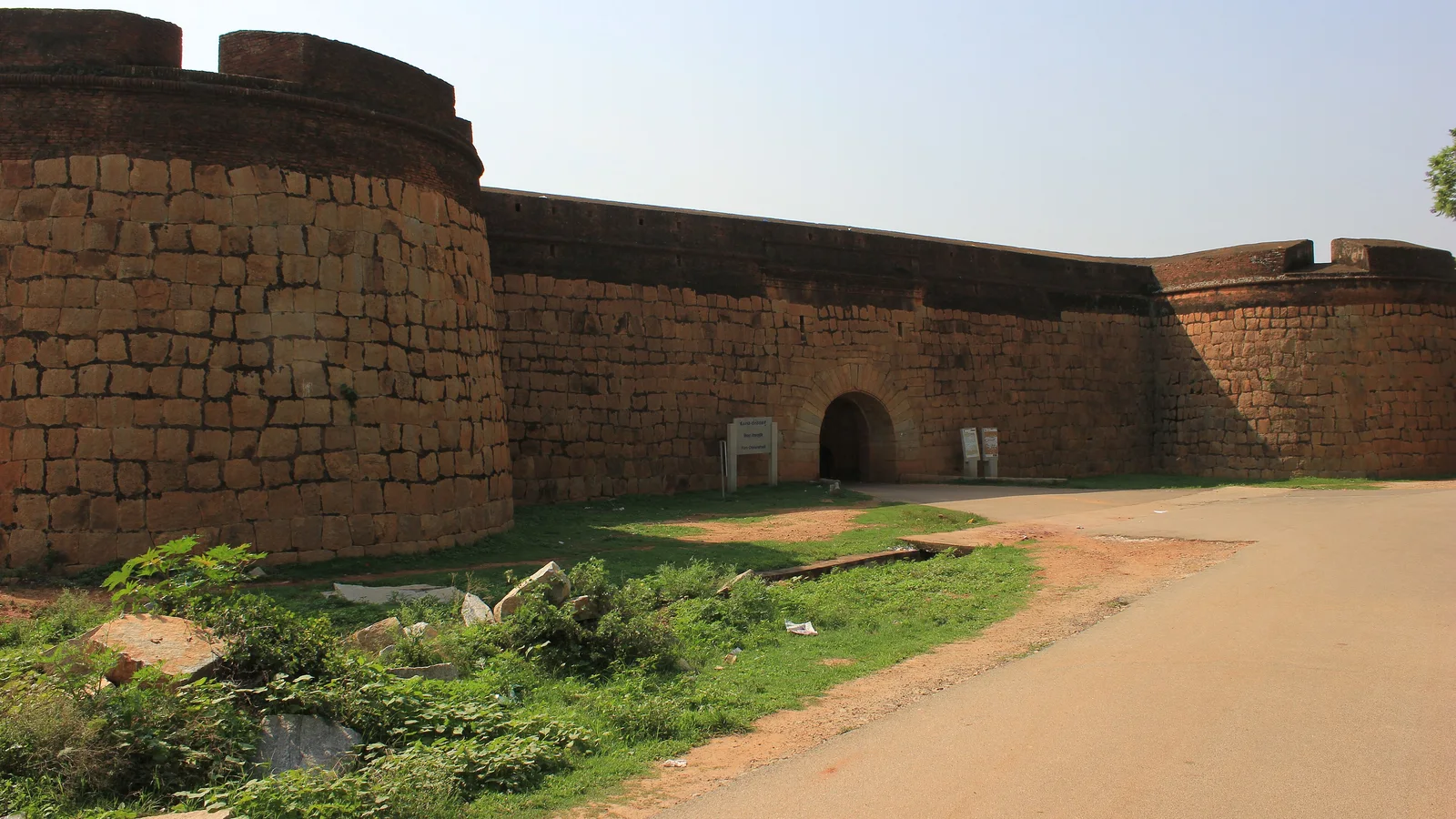
Devanahalli is better known today for the airport, but the town is far older than the runway. Its fort has changed hands between local chiefs, the Mysore kingdom, Hyder Ali, Tipu Sultan and the British, and much of its stone wall still stands. You can walk the walls, see a temple inside and find the spot where Tipu Sultan was born, all in a morning. Here is the history, what to look for and how to plan the visit.
Devanahalli Fort history: who built it and when?
The fort was first built in 1501 as a mud fort by Malla Baire Gowda, a chief of the Morasu Wokkalu family, with the consent of Devaraya at Devanadoddi, the old name of Devanahalli. That is the account given by the Bengaluru Rural district administration, and the Archaeological Survey of India’s Bengaluru circle dates it to about 1501 CE as well.
The district’s account of how the town began goes back further. A family that had left Conjeevaram (modern Kanchipuram) settled near Ramaswami betta, east of Nandi Hills. Their leader, Rana Baire Gowda, founded a village at Ahuti, later called Avati. His son Malla Baire Gowda founded Devanahalli, Chikkaballapura and Doddaballapura. Kempegowda, the founder of Bengaluru, came from the same family.
From Mysore to the British
- Mid-18th century: The fort stayed with Malla Baire Gowda’s descendants until the late 1740s, when Nanjarajaiah, the Dalwai (commander) of the Mysore army, attacked and took it.
- Hyder Ali’s rise: A young Hyder Ali served in that siege as a volunteer horseman under Nanjarajaiah, according to Deccan Herald. He later rose to become the ruler of Mysore.
- Stone fort: The Marathas held Devanahalli for a time, and Hyder Ali took it back and rebuilt it as the stone fort that stands today.
- Tipu Sultan: Tipu renamed the town Yousafabad, a name that never caught on.
- 1791: Lord Cornwallis laid siege to the fort and took it during the Anglo-Mysore wars.
What to see on the walls and inside
Give yourself one to two hours for the fort itself, more if you stop to read and photograph the temple carvings.
The walls and bastions
The district describes the fort as roughly oval and facing east, faced with dressed masonry, with 12 semi-circular bastions at regular intervals. The bastions have gun points built with lime and brick, and a broad battlement runs along the inner side. The entrances on the east and west have cut plasterwork and are small, sized for horses rather than carriages.
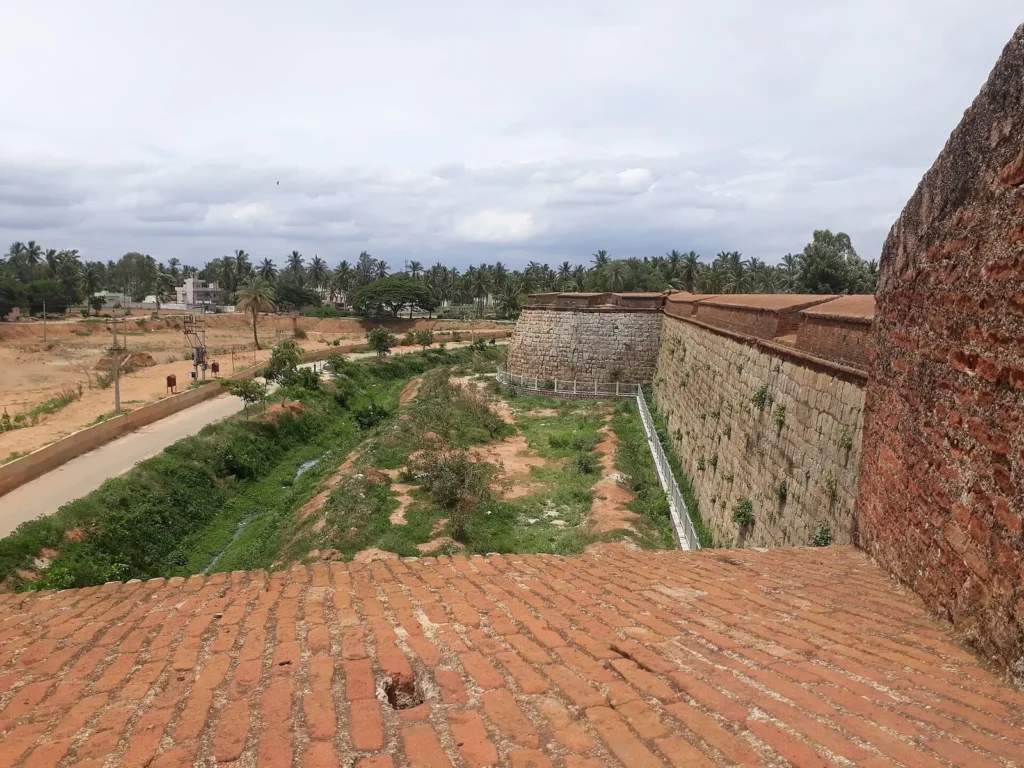
The walls make a pleasant walk. From the bastions you can see the small Devanahalli lake, and planes taking off from or landing at the airport nearby.
Sri Kote Venugopalaswamy temple
Inside the fort is the Sri Kote Venugopalaswamy temple, a Dravidian-style temple from the post-Vijayanagara period. The image of Venugopalaswamy stands in the sanctum with Rukmini and Satyabhama. Look for the Garuda pillar in the courtyard, the carved scenes from the Ramayana and Krishna’s childhood on the walls, and the four black stone pillars in the navaranga. Dress modestly and follow the temple’s own rules on footwear and photography.
The houses inside the fort
The district notes that the house where Hyder Ali and Tipu lived still exists, as does the house of Dewan Purnaiah, a senior official at their court.
Tipu Sultan’s birthplace
Tipu Sultan was born near the fort. A memorial marks the spot to the south-west of the fort: a four-pillared arched structure on a street called Tipu Road. It takes a short walk to find, and Deccan Herald has reported that the memorial is poorly maintained, so set your expectations.
What are Devanahalli Fort timings and the entry fee?
The Bengaluru Rural district page and the Archaeological Survey of India circle list we checked do not publish visiting hours or an entry fee for the fort. Travel sites quote different hours, so check before you go.
Practical tips:
- Go in daylight: Plan a morning or late-afternoon visit, when it is cooler and the light is good for photographs.
- Ask about the temple: If you want darshan at the temple inside the fort, ask locally about its timings, which may differ from access to the walls.
- Carry water and a hat: The walls are open to the sun.
- Wear good shoes: Parts of the walls and steps are uneven.
When is a good time to visit?
The cooler, drier months from about November to February are the most comfortable for walking the walls. In March to May, go early in the morning. In the monsoon, stone steps can be slippery, so take care on the bastions.
Devanahalli tourist places to add to the day
The fort is an easy half-day, so pair it with one or two other stops. Signature Club Resort’s guide to things to see in and around Devanahalli covers more, including:
| Place | Why go |
|---|---|
| Bhoga Nandeeshwara Temple | A Dravidian-style Shiva temple at the base of Nandi Hills |
| Yoga Nandeeshwara Temple | A Chola-period temple on top of Nandi Hills |
| Nandi Hills | Sunrise views; see our guide to the Nandi Hills sunrise |
| Skandagiri | A hill known for its sunrise trek and fort ruins |
| Jain temple outside Devanahalli | The Shree Nakoda Avati 108 Parshwanath temple, visible from the main road |
A simple day plan:
| Part of the day | Plan |
|---|---|
| Morning | Walk the walls and bastions, then visit the Venugopalaswamy temple |
| Late morning | Find Tipu Sultan’s birthplace memorial on Tipu Road |
| Lunch | Back at your hotel or resort |
| Afternoon | Rest, swim or visit the Bhoga Nandeeshwara Temple |
| Next morning | Nandi Hills for sunrise |
Where to stay nearby
Staying in Devanahalli turns a rushed day trip into an easy weekend, and puts you on the right side of the city for an early Nandi Hills sunrise.
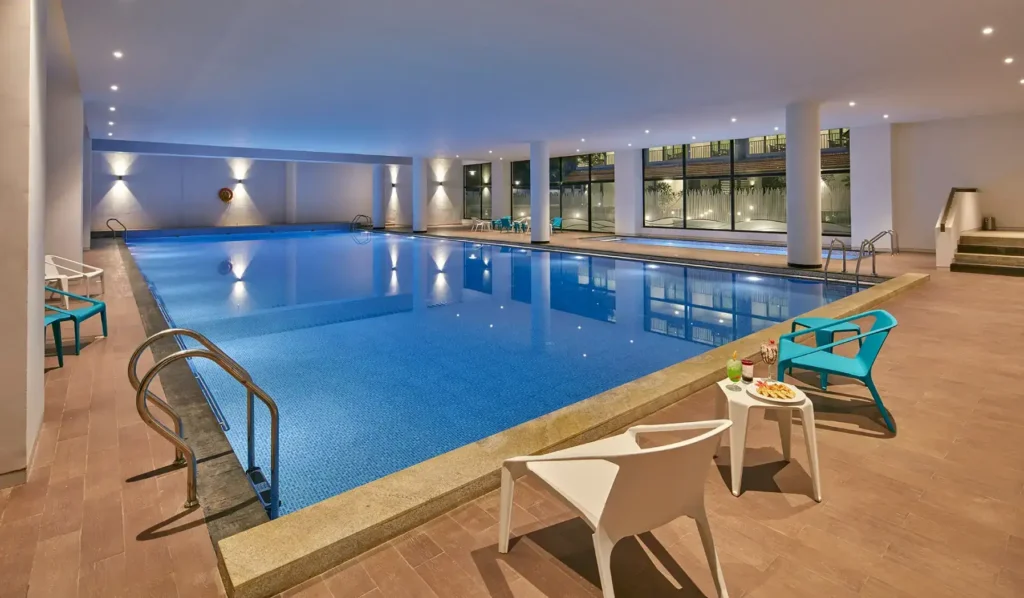
Signature Club Resort in Brigade Orchards, Devanahalli, lists the fort among the places around the resort. It has:
- Rooms and villas: 45 rooms and 4 villas, the 3BHK Tulip and the 4BHK Chrysanthemum, plus twin-bedded and interconnecting rooms for families. See rooms, suites and villas.
- Food: Tamarind for multi-cuisine meals, Dhaba On The Highway for Punjabi food, the Courtyard Café for snacks and the Pavilion Bar.
- After the walk: A temperature-controlled indoor pool, the Avantika Wellness Spa and courts for badminton, tennis and table tennis.
- Pets: Allowed in rooms and villas.
- Flights: About 20 minutes from Kempegowda International Airport, which suits a heritage stop before or after a flight.
FAQs
Who built Devanahalli Fort?
Malla Baire Gowda, a local chief, built the first fort at Devanahalli in 1501 as a mud fort, with the consent of Devaraya, according to the Bengaluru Rural district administration. Hyder Ali later rebuilt it in stone after taking it back from the Marathas. Lord Cornwallis captured it in 1791 during the Anglo-Mysore wars.
What is Devanahalli Fort famous for?
It is known for its oval stone walls with 12 semi-circular bastions, for its links with Hyder Ali and Tipu Sultan, and as the area where Tipu Sultan was born. A memorial marks his birthplace on Tipu Road, and the Sri Kote Venugopalaswamy temple stands inside the fort walls.
What are the timings of Devanahalli Fort?
The Bengaluru Rural district page and the Archaeological Survey of India circle list do not publish visiting hours for the fort, and travel sites disagree. Plan a daylight visit, ideally in the morning, and check locally before you go. Ask separately about darshan times at the temple inside.
Is there an entry fee for Devanahalli Fort?
No official entry fee is published on the Bengaluru Rural district page or the Archaeological Survey of India circle list we checked. Fees quoted on travel sites vary, so check before you go. Carry some cash for offerings at the temple or snacks in town.
Where can I stay near Devanahalli Fort?
Stay in Devanahalli itself. Signature Club Resort in Brigade Orchards, Devanahalli, lists the fort among the places around the resort and has 45 rooms, 4 villas, restaurants, a temperature-controlled indoor pool and a spa. It is about 20 minutes from Kempegowda International Airport and allows pets in rooms and villas.
Plan your stay
To book a stay for your Devanahalli visit, use the enquiry form on the contact page and choose “Stay Package”, call +91 99723 05352 or email info@brigadehospitality.com.